
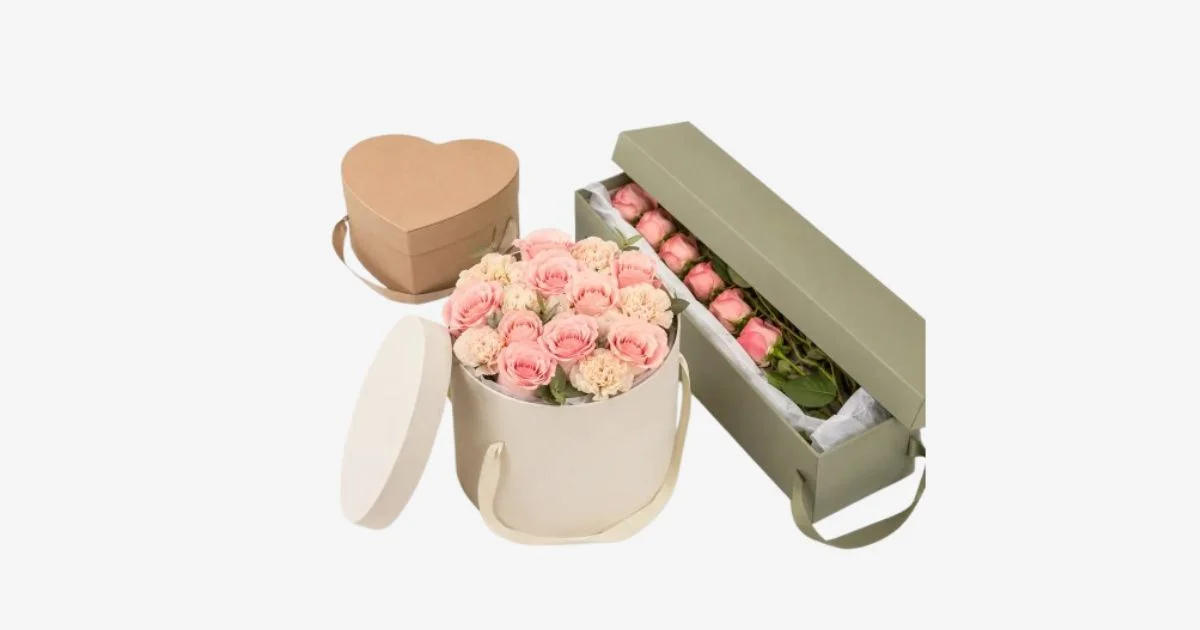
Cardboard Flower Boxes for Floral Presentation and Safe Delivery
Cardboard Flower Boxes give florists, gift stores, event planners and online sellers a practical way to present floral arrangements. These boxes support the flowers, reduce movement and create an attractive display for retail sales or personal gifts. Made from paperboard, they can be printed with a company logo, care instructions, contact details and decorative artwork.
Fresh flowers need packaging that supports their stems without covering their natural beauty. A suitable flower box keeps the arrangement together during storage, delivery and presentation. It can be produced for roses, tulips, lilies, carnations, orchids and mixed bouquets. The structure may be round, square, rectangular or heart shaped based on the flower type and intended occasion.
Paperboard Materials for Flower Packaging
Solid Bleached Sulfate Paperboard
Solid bleached sulfate paperboard has a smooth white surface that accepts detailed printing. It is commonly selected for premium floral boxes, wedding arrangements and luxury gift sets. The bright surface makes light colors and fine artwork appear more visible.
This material can carry full color printing, foil details and raised lettering. It provide a refined retail appearance without requiring a heavy wooden container. Florists may request different paperboard thickness based on the size and weight of the arrangement.
Folding Box Board
Folding box board is lightweight and suitable for small or medium flower arrangements. It can be cut, folded and assembled into many shapes. The smooth outer layer works with digital and offset printing.
These boxes can be shipped flat before use, which saves storage room for floral shops. Staff can assemble them when orders are received. This is very useful during busy periods such as Valentine’s Day and Mother’s Day, where packaging demands can go up very fast.
Recycled Paperboard
Recycled paperboard contains recovered paper fibers and offers a natural appearance. Brown, gray or muted printed finishes work well for garden inspired arrangements and local flower shops.
The surface may feel less smooth than virgin paperboard, yet it supports simple logos and single color artwork. Customers who prefer paper based packaging often appreciate this type of material. Recycled board is not automatically suitable for direct contact with wet stems, so an inner barrier or floral container may be required.
Popular Styles of Cardboard Flower Boxes
Round Flower Boxes
Round flower boxes are frequently used for roses and compact arrangements. The flowers sit upright inside the container, forming a balanced display that looks good from several angles. A lid can be supplied for covered presentation, or the box may remain open so the flowers stay visible.
Square and Rectangular Boxes
Square boxes suit mixed bouquets, floral gift sets and arrangements containing additional products. Chocolates, greeting cards, candles or small keepsakes can be placed beside the flowers with a fitted paperboard divider.
Rectangular flower boxes are useful for long stem roses. They help protect petals and stems during delivery. Some florist prefer a shallow rectangular style for flat floral presentation, yet deeper structures support upright designs.
Heart Shaped Flower Boxes
Heart shaped boxes are often ordered for anniversaries, engagements, weddings and Valentine gifts. Their distinctive shape immediately connects the package with affection and celebration. These structure may require stronger corners and careful paperboard scoring so the shape remains neat.
Hat Style Floral Boxes
Hat style flower boxes use a rigid looking round structure with a separate lid. The box may include ribbon handles, fabric bows or printed labels. It is popular for higher priced flower arrangements and corporate gifting. Despite the name, the structure is made for flowers rather than hats.
Inserts and Moisture Protection
Fresh flowers carry water, and untreated paperboard can weaken after continued contact with moisture. A florist may place a plastic liner, water cup, absorbent pad or floral foam inside the box. These components keep stems hydrated and reduce direct contact between water and paperboard.
A suitable internal setup may include:
- A removable plastic liner for holding water
- Floral foam for controlling the position of stems
- Paperboard dividers for flowers and gift items
- Tissue paper for covering the internal base
- An absorbent pad for reducing small leaks
The insert must match the box dimensions. A loose insert can move during transport, and one that is very tight may bend the side walls. It sounds simple, but a few millimeters can make a really noticeable difference in assembled flower packaging.
Printing and Branding Choices
Custom Printed Flower Boxes
Custom printing turns plain floral packaging into a recognizable company package. Florists can add brand names, telephone numbers, websites, social media details and flower care instructions. Event planners may print couple names, event dates or short messages for weddings and private celebrations.
Offset printing works well for larger orders and detailed artwork. Digital printing supports short quantities and seasonal designs. Flexographic printing may be used for simple artwork on natural paperboard surfaces.
Finishing Methods
Several finishes can change the appearance and surface feel of Cardboard Flower Boxes. Common choices include:
- Matte coating for a soft surface
- Gloss coating for brighter printed colors
- Foil stamping for metallic logos or text
- Embossing for raised brand elements
- Spot coating for highlighting selected areas
- Window cutouts for viewing part of the arrangement
A finish should suit the brand and sales setting. Heavy decoration is not required for every florist. Sometimes a printed logo and a well chosen board color does the job, and customers gets a package that feels thoughtful without looking too busy.
Box Sizes and Structural Planning
Flower box dimensions depend on stem length, head size and the number of flowers inside. Small boxes may hold a single rose or miniature bouquet. Medium sizes can support table arrangements, with large boxes used for dozens of roses or event displays.
The diameter, depth and paperboard thickness should be planned together. A tall box made from thin board may lean once floral foam and water are added. Larger packaging need reinforced bases and double wall sections for better support.
Florists should test a sample with real flowers before ordering production quantity. The sample shows how the box performs with moisture, weight and delivery movement. It can reveal issues that are difficult to see from a digital drawing.
Uses Across the Floral Industry
Cardboard flower packaging is used by retail florists, supermarket floral departments, wedding designers, subscription services and online gift companies. The same basic structure can serve many sales situations through changes in size, printing and internal supports.
Common uses include birthday bouquets, bridal arrangements, sympathy flowers, corporate gifts, holiday collections and hotel welcome gifts. A branded flower box can be photographed for online listings too, giving the florist a consistent visual presentation across a website and social platforms.
Storage and Assembly
Flat folding flower boxes require less warehouse space than fully assembled rigid containers. They can be stored in bundles and formed as orders arrive. Round and heart shaped boxes may arrive already assembled since their construction is more involved.
Boxes should be kept in a dry storage area away from direct sunlight and excessive humidity. Moisture can soften paperboard before the package is used. Printed surfaces may fade if cartons remains near strong sunlight for long periods.
Questions About Cardboard Flower Boxes
Are cardboard flower boxes suitable for fresh flowers?
Yes, they can hold fresh flowers when a moisture barrier, liner, floral foam or water container is placed inside. Untreated paperboard should not remain in direct contact with water.
Can flower boxes be printed with a logo?
Yes. Logos, brand colors, contact details and care instructions can be printed through digital, offset or flexographic methods.
What paperboard thickness works for flower boxes?
The suitable thickness depends on box dimensions and arrangement weight. Large boxes with wet floral foam needs thicker material or reinforced base panels.
Can these boxes be recycled?
Many paperboard flower boxes can enter paper recycling streams after plastic liners, foam, ribbons and other nonpaper parts are removed. Coatings and local recycling rules can affect acceptance.
What shapes are available?
Common shapes include round, square, rectangular and heart shaped designs. Custom structures can be developed for special collections, events or branded retail programs.
Are cardboard flower boxes supplied flat?
Folding styles can usually be supplied flat. Round, heart shaped and rigid style boxes are commonly delivered assembled to protect their form.